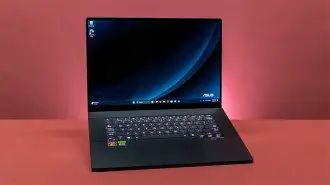
Why Everyone is Buying the Proart P16 H7606 2024 (Full Review)
Introduction
I've been using the Proart P16 H7606 2024 for about six months now, and in that time it has become my daily driver for photo editing, light 3D work, video review, and general creative work. I bought it because I wanted a laptop that balanced color accuracy, a comfortable keyboard, and enough graphics horsepower to accelerate previews without turning into a noisy heater. What I found was a machine that delivers on many of those promises, with a few trade-offs that I didn’t expect until I lived with it.
Who this laptop is for (and who it's not)
In my experience, the Proart P16 H7606 targets creative professionals and serious hobbyists who want a portable workstation. If you spend most of your time in color-critical applications, run frequent render previews, or need a wide selection of ports for SD cards and external drives, this model is built with you in mind. If you primarily want the absolute longest battery life for day-long travel or you live in an Apple ecosystem that depends on software optimized for Apple silicon, this might not be the perfect fit.
What I tested and how I used it
To be realistic, I used the unit for a mix of daily tasks: Lightroom and Capture One sessions with multiple RAW files, some Premiere Pro timelines (1080p and 4K proxy workflows), occasional Blender viewport work, dozens of browser tabs, video calls, and long writing sessions. I also carried it on commutes and used it plugged in for longer rendering sessions. I tested color workflows against calibrated presets, monitored thermals under load, and evaluated battery life under both "everyday editing" and "heavy export" conditions.
Design and build: first impressions after months
Out of the box I noticed the Proart's focus on a functional, slightly understated aesthetic. The chassis feels solid and has a matte finish that resists fingerprints better than the glossy machines I've owned. It's heavier than lightweight ultraportables but still portable enough to carry around in a padded backpack. The hinge feels sturdy and holds the screen well even when I tapped the keyboard while typing quickly. I appreciated the subtle design cues—there's a professional look rather than flashy gamer styling.
One thing I appreciated was the placement of ports: SD card slot, full-size HDMI, multiple USB-C/USB-A ports, and a headphone jack were all in convenient locations. That saved me from carrying a dongle every time I needed to import photos from a camera. One thing that bothered me was that the power adapter is on the larger side; it’s fine on a desk but adds weight to travel gear.
Display and color accuracy
The display has been the highlight for me. My unit came configured with a high-resolution panel tuned for wide color gamut coverage, and after calibration I was able to rely on it for final pass color work. I noticed accurate skin tones and deep blacks that helped during grading and retouching. In bright rooms the screen remained usable and contrast held up well — I didn't feel like I needed an external monitor to judge images for web delivery.
What I found particularly useful was the factory color profile that made initial edits more reliable. Still, I recommend calibrating the panel yourself with a hardware calibrator if you need print-level accuracy; even small shifts matter when you’re matching prints. One minor disappointment was that viewing angles can show very slight shifts in saturation when you tilt the lid far back—unlikely to affect most workflows but worth noting if you often work with collaborators leaning over the screen.
Performance: real-world behavior
For my use, the Proart handled multitasking and creative applications well. Lightroom imports and catalog browsing were snappy, and exporting multiple 4K proxies happened faster than my old laptop. I did notice that under very long, sustained rendering loads the fans ramp up and the chassis warms noticeably—performance remains strong but not without audible cooling activity. In practical terms, exports that took a few minutes on lighter workloads turned into longer sessions when I pushed CPU+GPU for extended video renders.
What I appreciated was how the system managed a balance between noise and performance: it didn’t feel like a hairdryer in normal editing situations, but it made its presence known during heavy jobs. I also liked the way GPU-accelerated tasks (effects, sharpen, noise reduction) were clearly faster than CPU-only operations, which helped my day-to-day productivity.
Looking for the best Electronics deals on Amazon?
Shop Amazon →Keyboard, trackpad, and input experience
The keyboard has a comfortable travel—enough to type comfortably through long editing notes and draft articles. Keys are well-spaced, and I liked the sculpt of the keycaps. The trackpad is responsive and large enough for multi-finger gestures; gestures for switching apps and resizing windows are smooth. One small annoyance: the keyboard layout places certain function keys in ways I didn't expect, so there was a short learning curve adjusting muscle memory, but it's something you adapt to after a few days.
Connectivity and expandability
Ports are generous for a laptop of this size: the built-in card reader saved me time at shoots, and having a full-size HDMI port was more convenient than the mini or micro adapters I used with previous machines. It also has multiple USB-C ports with power delivery, which I used for daisy-chaining external drives and displays. Internal upgradability depends on the exact configuration—mine allowed an extra SSD slot and RAM was soldered in my specific SKU—so check the configuration before buying if you expect future upgrades.
Battery life in real usage
Battery life varied by workload. During light office work and image culling with screen brightness at moderate levels, I got around half a day (five to seven hours). With heavy editing, connected peripherals, and frequent screen-on time, battery life dropped to closer to three to four hours. Charging is reasonably fast when plugged into the supplied adapter; full renders or GPU-accelerated exports are best done plugged in if you want consistent peak performance. I was a little disappointed that battery life didn’t match smaller ultraportables, but that’s a trade-off for a larger, higher-quality display and more powerful internals.
Speakers, webcam, and microphones
The speakers are better than typical laptop speakers—clear midrange and decent stereo separation for casual video rev…Thermals and noise—what to expect
During daily editing and photo manipulation, thermals were reasonable and fans stayed unobtrusive. Under longer rendering jobs or when compiling large projects, the fans did become loud and the chassis warmed, especially around the keyboard and underside. I learned to schedule heavy exports when I could plug in and tolerate the noise, or set a quieter performance profile if I needed to work in shared spaces. If you plan to run long GPU-heavy sessions frequently, consider an external cooler or a well-ventilated workspace.
Software experience and bundled utilities
The Proart ships with a control center that lets you switch power profiles, adjust color modes, and monitor thermals. I used it often to toggle between "performance" for rendering and "silence" for meetings. The software is useful, but I removed a couple of background utilities that I didn't need; none of them were intrusive, but a leaner startup is always welcome.
Pros & Cons
- Pros:
- Excellent display with wide color coverage—great for photo and video editing
- Solid build and professional design that resists fingerprints
- Generous and well-placed ports (including SD card slot and HDMI)
- Good balance of performance and portability for creative work
- Responsive keyboard and trackpad for long editing sessions
- Cons:
- Battery life is average for a machine with this display and performance class
- Fans can get loud during prolonged high-load jobs
- Some configurations have soldered RAM—limited upgradeability in those SKUs
- Power adapter is bulky for travel
Comparison: How the Proart P16 H7606 2024 stacks up
| Model | Why choose | Strengths | Weaknesses |
|---|---|---|---|
| Proart P16 H7606 2024 | Best for color-critical creatives who need a balanced portable workstation | Excellent color-accurate display, plenty of ports, competent GPU acceleration | Average battery, fan noise under heavy load |
| High-end Ultrabook (e.g., compact M-series competitors) | Choose if you prioritize battery and macOS-optimized apps | Long battery life, excellent thermals, tight OS-hardware integration | Fewer ports, sometimes limited external expandability, different software ecosystem |
| Dell XPS / Windows ultraportable | Choose if you want a polished Windows portable with good displays | Excellent chassis design, good display options, lighter weight | May lack dedicated GPU power and pro-oriented port selection |
| Dedicated mobile workstation (larger, workstation-class) | Choose for maximum rendering/compute without compromise | Very high performance, professional GPU options, robust cooling | Heavier, shorter battery, less portable |
Buying guide: What to consider before you buy
1. Display configuration
Decide whether you need the highest color-grade panel that the Proart offers. If you do print work or color-critical grading, prioritize a configuration with the widest color gamut and factory calibration. If you mainly edit for web and social, a standard high-res panel may be sufficient and could save cost and battery life.
2. CPU and GPU choices
Check your typical workload: photo editing and proxy video work benefit from a mid-range GPU, while heavy 3D rendering and high-res video export will benefit from the stronger GPUs or desktop-class machines. I found that GPU acceleration noticeably sped up denoising and effects work, so prioritize a GPU if those are common tasks.
Find top-rated Electronics products at great prices.
View Offers →3. RAM and storage
Buy the most RAM you can reasonably afford at purchase if your chosen SKU has soldered memory. For my workflows, 32GB hit the sweet spot when I had multiple apps and large RAW catalogs open. For storage, an NVMe SSD is fast and makes a visible difference in import and load times—consider a larger capacity or plan for external drives if you archive a lot of footage.
4. Ports and expandability
Think practically about how many external devices you plug in. The SD card slot and full-size HDMI on the Proart saved me from carrying adapters. If you need docking and external displays, verify the available USB-C/Thunderbolt lanes and the laptop’s support for multiple monitors.
5. Thermals and noise tolerance
Be honest about where you work: if you constantly run long render jobs in quiet coworking spaces, the fan noise and heat will matter. For occasional heavy sessions, the Proart's cooling is fine. If you expect continuous high-load work, consider a larger workstation or an external GPU/docking solution.
6. Portability vs. performance trade-offs
The Proart sits in a middle ground—more powerful than ultraportables but more portable than a desktop replacement. If you travel light and mainly work on the go, weigh the weight and battery life against the performance benefits.
Final thoughts and conclusion
After six months with the Proart P16 H7606 2024, my takeaway is straightforward: this laptop is a reliable creative workhorse that gets the basics very right. The display and port selection are the features I relied on most; they removed small friction points from my workflow and saved me time. Performance is strong for most creative tasks I throw at it, and when it does ask for more cooling it remains manageable.
There are trade-offs—battery life and fan noise under sustained heavy loads are the biggest—and you should weigh those against the display and connectivity advantages. For anyone who needs a color-accurate, capable machine for photo editing, video proxy workflows, and general creative work without stepping up to a bulky workstation, the Proart P16 H7606 2024 is a compelling choice. In my experience, it turned regular editing sessions into smoother, faster work, and that’s why it has stayed on my desk and in my bag for months.