The Ultimate Showdown: Rugone Xever 7 Pro Rugged Phone vs Fritz Box 5690 Pro Wi Fi Router for 2026
In an era when connectivity and resilience matter more than ever, buyers increasingly face a choice between devices designed for mobility and those designed to anchor a home or small office network. The Rugone Xever 7 Pro rugged phone and the Fritz!Box 5690 Pro Wi‑Fi router represent two ends of that spectrum: one built to survive extremes and keep a single user or team online in the field, the other built to deliver high-performance, feature‑rich networking for multiple devices in a fixed location. This article breaks down both products, examines real-world use cases, lists pros and cons, provides a direct comparison, and offers a buying guide to help readers decide which device—or combination of both—best fits their needs in 2026.
Introduction: Different tools for different tasks
Rugged phones and high-end home routers are not substitutes; they are complementary. The Rugone Xever 7 Pro is positioned for professionals who need a durable handset that can take a beating and maintain reliable cellular connectivity away from infrastructure. The Fritz!Box 5690 Pro targets households and small offices that want maximum Wi‑Fi performance, advanced routing features, and a stable wired backbone.
This article compares both from the perspective of buyers who care about reliability, network performance, security, manageability, and long‑term value. Practical scenarios are emphasized: on‑site construction crews, emergency responders, remote monitoring teams, smart homes, multi‑device households, and small business networks.
Rugone Xever 7 Pro — Detailed review and analysis
The Rugone Xever 7 Pro is a purpose‑built rugged smartphone intended for outdoor work, industrial environments, and users who prioritize durability and long battery life over sleek consumer design. Its core appeal is survivability: impact resistance, ingress protection against dust and water, and the ability to operate in a wide temperature range.
Build and durability
Durability is the Xever 7 Pro’s defining characteristic. Typical rugged‑grade phones like this are engineered to conform to military standard shock ratings (for example, MIL‑STD‑810 family) and have high IP ratings (IP68/IP69K or equivalent), which means protection against dust, immersion, and high‑pressure washdowns. The device’s chassis often uses reinforced frames, rubber bumpers, and hardened glass over the display to resist scratches and drops.
Connectivity and radios
For field use, the Xever 7 Pro focuses on cellular connectivity first: multi‑band 4G/5G support, carrier aggregation where supported, and robust antenna design to maintain signal in marginal coverage areas. Dual SIM capability is common in this class, enabling separation of work and personal plans or failover across carriers. Some models include Wi‑Fi 6 for local networks, Bluetooth for accessories, and GNSS (multi‑band GPS/GLONASS/Galileo) for location tracking.
Battery life and power
Battery capacity is often large in rugged phones—valuable for long shifts where recharging is impractical. Extended battery life plus economy modes for LTE can allow multi‑day operation. Many rugged models offer fast wired charging and support for power delivery to external devices. Optional replaceable batteries or hot‑swap accessories are relevant in field scenarios where continuous uptime is essential.
Software, sensors, and extras
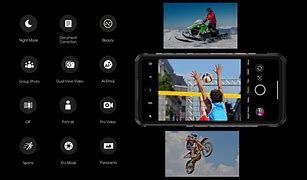
Rugged phones typically run a mainstream mobile operating system (Android variants are common) and may include enterprise‑oriented features: push‑to‑talk (PTT), programmable SOS buttons, enhanced GPS reporting for asset tracking, and modular accessory support (e.g., vehicle cradles, barcode scanners). The Xever 7 Pro’s software suite is likely to emphasize manageability and remote provisioning for organizations deploying many units.
Discover deals on Electronics — updated daily.
See Deals →Real‑world use cases
- Construction and utilities: Durable in dusty, wet, and impact‑prone environments; reliable for reporting, photos, and coordination on job sites.
- Field service and inspections: Long battery life and GNSS accuracy help technicians complete long routes without recharging and maintain records with geotagged photos.
- Emergency operations: SOS buttons and ruggedness make the device suitable for first responders and search teams.
- Outdoor enthusiasts and remote workers: Useful where consumer phones are at higher risk of damage and charging infrastructure is sparse.
Pros & cons
- Pros
- Exceptional durability against drops, dust, and water.
- Long battery life suited for extended field work.
- Strong cellular reception and dual‑SIM flexibility.
- Enterprise features (SOS, PTT, remote management).
- Cons
- Bulkier and heavier than mainstream smartphones.
- Typically slower SoCs and older camera technology compared with flagship consumer phones.
- Less emphasis on aesthetic design and high‑end multimedia features.
- Price premium relative to basic consumer phones with similar raw specs.
Fritz!Box 5690 Pro — Detailed review and analysis
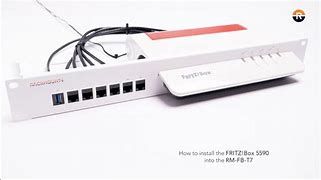
The Fritz!Box 5690 Pro is a fixed broadband and Wi‑Fi router designed to be the center of a fast, secure home or small office network. Fritz!Box devices are known for their comprehensive feature sets: advanced Wi‑Fi, wired backhaul, telephony integration, mesh networking, and a polished firmware experience with frequent updates.
Network performance and standards
In 2026 the notable router priorities are high device density, low latency for gaming and real‑time collaboration, and robust multi‑gig wired backhaul. A “Pro” router in the Fritz!Box family typically supports the latest Wi‑Fi standard available at launch, multi‑antenna MIMO designs, and sophisticated channel management to deliver consistent throughput across multiple rooms and devices.
Features and ecosystem
Fritz!Box models commonly include:
- Built‑in telephony (DECT base stations) for cordless handsets and integrated call management.
- Advanced NAT, firewall, VLAN, and VPN features f…
Real‑world use cases
- Busy households and home offices that require stable connections for video conferencing, streaming, and cloud backups.
- Small businesses that need integrated telephony, secure remote access, and device segmentation.
- Homes with many smart devices where centralized parental controls and scheduled network access are needed.
- Users who value long‑term support and local control of router settings rather than cloud‑only management.
Pros & cons
- Pros
- Robust feature set combining routing, Wi‑Fi, telephony, and mesh capabilities.
- Strong firmware support and regular updates.
- Excellent manageability for mixed home/office environments.
- High throughput and reliable wired connectivity for demanding applications.
- Cons
- Fixed device that requires mains power and a stable location—no mobility.
- Advanced features can be overwhelming for non‑technical users.
- Higher upfront cost compared with basic consumer routers.
- Performance gains require a properly configured wired backbone and quality ISP connection.
Side‑by‑side comparison
Category Rugone Xever 7 Pro (Rugged Phone) Fritz!Box 5690 Pro (Wi‑Fi Router) Primary purpose Mobile, durable communications for individuals/teams in the field Fixed networking hub for homes and small offices Portability High — pocketable, built for movement Low — stationary device requiring power and placement Connectivity Cellular first (4G/5G), Wi‑Fi for local networks, Bluetooth Wired Ethernet, high‑performance Wi‑Fi (latest standard), DECT/VOIP Durability Designed for impact, water, dust resistance Consumer electronics durability — not ruggedized Battery / Power Battery operated — long endurance options AC powered — continuous operation but requires outlet Target buyers Field workers, first responders, outdoor professionals Families, small businesses, power users wanting advanced features Setup complexity Low to moderate — mobile device setup and carrier provisioning Moderate — router configuration, mesh setup, VLANs, telephony Security & manageability Mobile device management and SOS/PTT features Advanced firewall, VPN, parental controls, firmware updates Best combined use Paired with a strong home router for backup and synchronization Used in a fixed location to distribute connectivity to many devices Which one should be chosen and when: buying guide
Choosing between the Rugone Xever 7 Pro rugged phone and the Fritz!Box 5690 Pro comes down to use case, priorities, and deployment scenario. The following checklist helps determine which device—or combination of devices—makes sense.
1. If portability and survivability are the top priorities
Choose the Rugone Xever 7 Pro. It is designed to withstand drops, moisture, and rough handling, and provides cellular failover where wired infrastructure is absent. Ideal for workers who move between sites, teams operating in extreme weather, and anyone who must maintain voice/data connectivity while away from an office.
2. If a central high‑performance network for many devices is needed
Choose the Fritz!Box 5690 Pro. For households or small offices supporting multiple streams of video, gaming, remote work, and smart home devices, a powerful router with mesh capabilities, robust QoS, and management tools will deliver the best user experience.
Find top-rated Electronics products at great prices.
View Offers →3. If the requirement is both mobility and a strong home network
Buy both. They serve complementary roles. The rugged phone keeps a user connected on the move; the Fritz!Box anchors the home or office network, providing superior Wi‑Fi and wired performance for devices when the user returns to base. The phone can often be set to prefer the home Wi‑Fi connection when in range to save cellular data and extend battery life.
4. Budget considerations
Rugged phones typically command a premium versus mainstream consumer phones due to specialized engineering. High‑end routers can also be costly, especially when multi‑gig ports and advanced features are required. Buyers should weigh the cost of each against the cost of failure in their environment: downtime on a construction site or unreliable home connectivity can be more expensive than the hardware.
5. Technical readiness and support
Consider long‑term firmware support and manageability. Fritz!Box devices are known for regular firmware updates and a rich UI for administrators. For organizations deploying rugged phones at scale, look for options for remote device management (MDM), warranty service, and local repair/replacement logistics.
Practical buying tips and checklist
- For the Rugone Xever 7 Pro: confirm the specific cellular bands supported match the carriers used in the deployment area; check accessory ecosystems (vehicle mounts, extended batteries); verify warranty, repair service, and MDM compatibility.
- For the Fritz!Box 5690 Pro: verify ISP compatibility (FTTH, cable, VDSL), check whether multi‑gig WAN or SFP interfaces are required, and plan the wired backbone for mesh nodes if whole‑home coverage is desired.
- When deploying both: plan network security—use strong passwords, enable automatic firmware updates where appropriate, and segment devices using VLANs or guest networks for IoT devices.
- Look beyond raw specs: consider real support, documentation quality, community resources, and long‑term vendor roadmaps.
Final considerations
Practical deployments often require both mobility and a reliable fixed network. For organizations that manage field teams, a rugged phone like the Rugone Xever 7 Pro is indispensable for continuity of operations. For homes and small businesses that host many devices and need advanced routing features, the Fritz!Box 5690 Pro is built to be the reliable backbone.
When choosing, think in terms of risk mitigation. In the field, a rugged phone reduces the risk of device failure and lost communication; at home or in an office, a capable router reduces the risk of interrupted work, slow streams, and insecure device access. Budget accordingly and prioritize the features that reduce operational pain for the intended use cases.
Conclusion
Both the Rugone Xever 7 Pro and the Fritz!Box 5690 Pro have distinct roles in a connected world. The Xever 7 Pro excels where physical durability, battery endurance, and cellular reliability are paramount. The Fritz!Box 5690 Pro excels where centralized performance, advanced features, and manageability are required. The decision is not strictly an either/or; instead, it is about placing the right tool at the right point in a person’s or organization’s workflow. For many users in 2026, the most resilient solution will be a thoughtful combination: rugged devices for the field, and robust routing infrastructure at the base, each doing what it does best.