Biggest Charge 4 Buying Mistakes (And How to Avoid Them)
Introduction
The JBL Charge 4 remains a popular choice in the portable Bluetooth speaker market because it balances loud, bass-forward sound with rugged, everyday usability. Many buyers are drawn to its long battery life, waterproof rating, and the convenience of using the speaker as a power bank. At the same time, shoppers frequently make avoidable mistakes when evaluating the Charge 4 against competing models or when matching the speaker to their real-world needs.
This article explains the most common Charge 4 buying mistakes, offers a detailed product analysis, and provides practical buying guidance. Its purpose is to help readers make an informed decision—whether the speaker will serve backyard parties, commuting, travel, or home listening—without regrets.
Detailed Product Review and Analysis
Overview
The Charge 4 is a mid-sized portable Bluetooth speaker designed for active, on-the-go listening. It targets people who want a durable speaker that can handle outdoor use, provide extended playtime, and double as a device charger. The design is utilitarian rather than flashy, and the feature set reflects a pragmatic, user-focused approach.
Design and Build
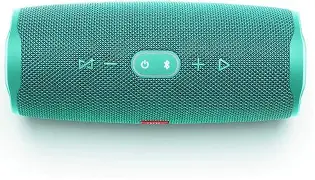
The Charge 4 uses a cylindrical form factor with a fabric-wrapped body and rubberized end caps. The controls are straightforward: power, Bluetooth pairing, volume, and a play/pause button. The ports are covered by a rubber flap to protect against water ingress, and the chassis is solid enough to handle the occasional bump or drop during everyday use.
Sound Quality
The Charge 4’s sound profile emphasizes low-end impact, which is appealing for outdoor listening and group settings. The tuned drivers and passive radiators produce a pronounced bass response that often feels fuller than what a similarly sized speaker offers. That said, the emphasis on bass can sometimes mask midrange detail, making vocals and acoustic instruments less forward at high volumes. For listeners who prioritize vocal clarity or critical home listening, that bass-forward signature is a consideration.
Battery and Charging
Battery life is one of the Charge 4’s headline strengths: in typical use it delivers long playback times that comfortably span a day of intermittent use or a full outdoor gathering. The speaker also functions as a power bank, allowing users to charge phones or small devices via USB while away from a power outlet. Buyers who plan extended outdoor use or depend on a single device for both music and phone charging will find this especially useful.
Connectivity and Multi-Speaker Features
Bluetooth pairing is straightforward and stable for most environments, though like all Bluetooth devices it is subject to interference and range limitations. The Charge 4 supports linking multiple compatible speakers for bigger sound, which is useful for larger spaces. Buyers should be aware that JBL has used different networking technologies across generations; compatibility between models is limited to those that share the same linking standard.
Durability and Waterproofing
The Charge 4 is rated for protection against immersion in water, making it a practical choice for poolside use or sudden rain. However, the speaker is not explicitly dust-rated in the way IP6x-rated devices are, so caution is advisable in very dusty environments like desert beaches or construction sites.
Real‑World Performance
In everyday scenarios the Charge 4 performs well: it fills small to medium outdoor spaces, handles background music for gatherings, and survives camping trips and travel. It is less well-suited for audiophile listening parties where nuanced midrange detail or stereo imaging is a priority, and its weight and size are noticeable when packing ultralight for long hikes.
Biggest Buying Mistakes—and How to Avoid Them
Mistake 1: Expecting Studio‑Level Accuracy
Why buyers get it wrong: Marketing images and enthusiastic reviews can imply that a portable speaker will perform like bookshelf or studio monitors. In practice, portable Bluetooth speakers prioritize portability, battery life, and perceived loudness over flat, analytical sound.
How to avoid it: Decide how the speaker will be used. For tailgates, beach days, or casual backyard parties, the Charge 4’s punchy low end and high volume are advantages. For critical listening—where accurate mids and a neutral tonal balance matter—consider bookshelf speakers or a different class of audio gear.
Mistake 2: Assuming All JBL Wireless Linking Is Interoperable
Why buyers get it wrong: JBL has used different speaker-linking technologies across product generations. Buyers sometimes assume that a Charge 4 will wirelessly link with newer or older JBL speakers even when they use a different protocol.
Find top-rated Audio & Headphones products at great prices.
Shop Amazon →How to avoid it: Before planning multi-speaker setups, verify the exact linking standard of each speaker model. If seamless pairing across a range of models matters, choose models with the same linking technology or a vendor ecosystem explicitly designed to work together.
Mistake 3: Underestimating Portability Needs
Why buyers get it wrong: The Charge 4’s durability and battery make it attractive for travel, but it weighs more than the smallest pocketable speakers. Buyers who prioritize ultralight packing sometimes regret choosing a heavier model.
How to avoid it: Consider weight and dimensions in the context of typical use. For daily commuting or backpacking, a lighter speaker may be a better fit. If the primary use is car outings, picnics, or backyard parties, the Charge 4’s trade-off of weight for battery and sound is often worthwhile.
Mistake 4: Counting on Built‑In Voice Assistants or Microphone Features
Why buyers get it wrong: Some portable speakers include microphones and voice-assistant support. Assuming the Charge 4 has hands-free calling or voice assistant integration can lead to disappointment.
How to avoid it: Check the product spec sheet for microphone and assistant support before purchase. If hands-free calling or voice control is important, select a model that explicitly advertises those features.
Mistake 5: Misunderstanding Water and Dust Protection
Why buyers get it wrong: An IPX7 waterproof rating means the device can survive immersion in wate…How to avoid it: Read the rating carefully. If the speaker will live on a sandy beach or in dusty workplaces, consider additional protection like a pouch or choose models with full IP ratings (e.g., IP67) that explicitly include dust protection.
Mistake 6: Overlooking Charging Time and Power‑Bank Limits
Why buyers get it wrong: The Charge 4’s battery can recharge phones, but the output is constrained by the speaker’s internal battery and charging circuitry. Some buyers expect a fast, full phone charge or the ability to charge multiple devices repeatedly.
How to avoid it: Treat the power‑bank capability as an emergency convenience rather than a primary charger. If rapid phone charging or repeated device top-ups are required, pack a dedicated power bank with higher capacity and faster output.
Mistake 7: Relying on Marketing Playtime Numbers
Why buyers get it wrong: Manufacturer playtime estimates are measured under ideal conditions (moderate volume, no bass boosts, limited environmental interference). Real-world use—higher volumes, bass-heavy content, and wireless connections—reduces runtime.
How to avoid it: Use the advertised playtime as a best-case reference. For planning events, assume shorter battery life and carry a charging option or spare power if continuous playback matters.
Pros & Cons
- Pros
- Robust, bass-forward sound suitable for outdoor use and parties
- Long battery life that supports extended outings
- Waterproof construction that stands up to poolside use
- Power‑bank capability to charge phones and small devices
- Simple, durable design and straightforward controls
- Cons
- Heavier and less pocketable than ultra-compact speakers
- Sound prioritizes bass over midrange detail—less ideal for critical listening
- Linking compatibility limited to speakers that use the same JBL linking standard
- Not explicitly dust-rated; caution advised in very dusty conditions
- Power‑bank output is useful but not a substitute for a high-capacity charger
Comparison Table
Below is a concise comparison of the Charge 4 against earlier and later models to highlight where it fits in the product line and when buyers might choose one over another.
Looking for the best Audio & Headphones deals on Amazon?
Browse Now →| Model | Typical Battery Runtime | Water Resistance | Multi‑Speaker Linking | Power‑Bank (USB Out) | Best For |
|---|---|---|---|---|---|
| Charge 3 | Up to ~20 hours (varies) | IPX7 | JBL Connect | Yes | Budget-conscious buyers who want loud, portable sound |
| Charge 4 | Up to ~20 hours (real-world varies) | IPX7 | JBL Connect+ | Yes | Weekend gatherings, poolside, and users who want a power bank |
| Charge 5 | Up to ~20 hours (varies) | IP67 (varies by model) | PartyBoost (different linking standard) | Yes | Users wanting updated features and improved dust/water resistance |
Buying Guide: What to Consider Before Choosing a Charge 4
Define Primary Use Cases
Buyers should think about how and where the speaker will be used most often. Common use cases include:
- Backyard barbecues and small parties—prioritize loudness and bass
- Poolside or beach use—prioritize waterproofing and robust build
- Daily commuting—prioritize size, weight, and convenience
- Travel and camping—prioritize battery life and the power‑bank feature
- Home listening—prioritize clarity and midrange detail
Check Compatibility for Multi‑Speaker Setups
If planning to create a stereo or multi-speaker array, confirm that other speakers support the same linking standard. Mixing models with different linking systems can result in incompatibility.
Evaluate Battery Needs Realistically
Estimate playback requirements conservatively. If planning a full-day event, either choose a speaker with a very large battery, prepare charging options, or schedule breaks to recharge.
Verify Durability and Ratings
Waterproofing is a practical benefit, but if the intended environment is dusty or sandy, look for models with an explicit dust ingress rating or take protective measures such as a sealed bag when not in use.
Consider Portability Trade‑Offs
Weight and dimensions affect convenience. The Charge 4's weight is a trade-off for battery capacity and louder sound; confirm that this trade-off fits the user's mobility needs.
Assess Feature Priorities
Decide which features are essential: built-in voice assistants, hands-free calling, a power bank, or the ability to link many speakers. Cross-check the model’s spec sheet so no key feature is missing at purchase.
Test Sound If Possible
Sound preference is subjective. Listening in person, if an in-store demo is available, helps ensure the speaker’s tonal balance matches the buyer’s tastes. Play familiar tracks that include vocals, acoustic instruments, and bass-heavy content to judge performance across the spectrum.
Plan for Accessories and Protection
Consider cases, straps, and dust covers. While the Charge 4 is rugged, accessories protect the finish and ports and can make transport simpler. Also check warranty terms and after-sales support options.
Conclusion
The JBL Charge 4 is a practical, well-rounded portable speaker for people who want robust bass, long battery life, and a degree of ruggedness suitable for outdoor use. Most buying mistakes stem from mismatched expectations—expecting monitor-like accuracy, assuming cross-generational speaker linking, or underestimating weight and dust exposure. By clarifying how the speaker will be used, checking compatibility and ratings, and treating manufacturer specs as idealized benchmarks rather than guarantees, buyers can determine whether the Charge 4 matches their needs or whether another model is a better fit.
Ultimately, the Charge 4 excels as an everyday outdoor speaker and emergency power source for small devices. When buyers align their priorities with the speaker’s real strengths—durability, battery endurance, and bold low-end performance—they are far less likely to encounter buyer’s remorse.