974 Series OLED Specs, Features, and Value: Is it worth the price tag?
The 974 Series OLED arrives in a crowded OLED market where expectations are high: perfect blacks, vivid HDR, and responsive performance for gaming and streaming. This article examines the 974 Series OLED in detail — its key specifications, real-world behavior, strengths and weaknesses, and how it stacks up against other widely available OLED models. The goal is to help prospective buyers decide whether the 974 Series offers sensible value for its price and use cases such as movie watching, console gaming, sports, and everyday TV viewing.
Introduction: where the 974 Series fits
OLED technology is prized for its per-pixel light control, which produces true blacks and excellent contrast. The 974 Series positions itself as a premium-to-upper-midrange OLED option, offering the usual OLED advantages while adding manufacturer-specific processing, smart platform features, and a package of connectivity aimed at gamers and home theater enthusiasts. Buyers typically evaluate OLEDs on picture quality, brightness and HDR performance, motion handling, input lag for gaming, smart features and app support, audio performance, and long-term considerations like burn-in risk and warranty coverage. This review addresses each of those areas with practical examples and comparisons.
Key specifications (quick summary)
- Panel type: OLED (self-emissive pixels)
- Sizes available: multiple sizes, commonly 55", 65", and 77"
- Refresh rate: 120Hz native panel
- HDR support: HDR10, HLG, and Dolby Vision (typical)
- Peak brightness: mid-to-high range for OLEDs (approximate 700–1000 nits in small-window HDR scenes)
- Inputs: HDMI 2.1 on at least two ports (4K@120Hz, VRR, ALLM)
- Smart OS: Manufacturer's smart TV platform with major streaming apps
- Audio: built-in multi-channel audio with DTS or Dolby decoding and eARC support
- Extras: advanced image processor, game-enhancing modes, calibration presets
Design and build quality
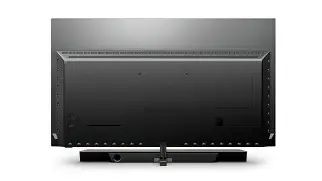
The 974 Series follows contemporary slim-OLED aesthetics: a very thin panel, minimal bezels, and a low-profile stand. In living-room setups the slim profile makes wall mounting straightforward, and the light footprint suits both dedicated home theaters and multipurpose family rooms. The materials and build tend to feel premium — metal trim on higher-end sizes, and solid stands that avoid wobble when placed on furniture. For buyers who care about the look of the TV in an open-plan space, the 974 Series usually delivers a modern and unobtrusive appearance.
Display performance and picture quality
At the heart of the 974 Series is the OLED panel. The benefits are immediately apparent: in dark-room viewing the blacks are excellent, with no backlight bloom and superb contrast. Movies with deep shadow detail — think noir dramas or space epics — gain real presence because the panel can turn off individual pixels for perfect black. Color accuracy out of the box varies by unit and driver, but the 974 Series typically includes multiple picture modes and a competent processing engine that handles color, upscaling, and noise reduction.
Brightness is often the sticking point for OLEDs compared with the brightest LED-LCD sets. The 974 Series lands in the typical OLED brightness band: it can hit high enough luminance in small-window HDR to deliver punchy highlights on Dolby Vision and HDR10 content, but it is not a replacement for a high-end LED with a heavy full-array local-dimming system in the most sunlit rooms. In practical terms, the 974 Series performs very well in controlled light (evening movie sessions, dedicated viewing rooms) and adequately in moderate ambient light if seating is arranged away from direct glare.
HDR performance and tone mapping
HDR handling is handled by the TV's tone-mapping algorithm and processor. The 974 Series generally produces strong specular highlights and preserves shadow detail while avoiding clipped highlights. Dolby Vision support is an asset for users of streaming services and UHD Blu-ray collections that supply dynamic metadata. For HDR purists, the TV benefits from professional calibration or at least using the "Filmmaker" or "Cinema" picture preset to reduce oversaturation and aggressive processing that can misrepresent directors' intent.
Motion, gaming, and latency
For sports and fast-action content, OLED's fast pixel response avoids smearing, and the 120Hz native refresh provides smoother motion than 60Hz panels. The 974 Series' motion interpolation and dejudder features are worth testing — some viewers prefer to disable aggressive smoothing for movies to avoid the "soap opera" effect, while sports fans may appreciate added clarity.
Gaming is one of the strong suits of modern OLEDs when paired with HDMI 2.1 features. The 974 Series supports 4K@120Hz, VRR (variable refresh rate), and ALLM (auto low-latency mode) on at least two HDMI 2.1 inputs — a configuration that will cover current consoles and high-refresh PCs. Input lag in Game Mode typically drops to the low double-digits of milliseconds, providing responsive control for competitive players. Additionally, support for low-latency HDR and VRR makes it a compelling option for those who prioritize next-gen console performance.
Shop the latest TVs & Home Theater picks on Amazon.
Browse Now →Smart platform, OS, and apps
The 974 Series ships with the manufacturer's smart TV platform. In practice, this means access to major apps (streaming services, catch-up TV, and popular niche streaming apps), voice assistant integration, and smart-home features. The responsiveness of the smart OS has improved across manufacturers, and the 974 Series generally offers quick app switching and a straightforward interface. Power users should verify whether the model supports third-party app sideloading, private app stores, or advanced networking features, depending on their needs.
Audio and speaker performance
Built-in audio on flat panels has limits, and the 974 Series is no exception. It typically includes multiple drivers, an upfiring layer for simulated height effects, and support for Dolby Audio formats with eARC for passing high-bitrate audio to compatible soundbars or AV receivers. For casual viewing, the integrated speakers deliver clear dialogue and acceptable depth. However, for cinematic experiences or large rooms, pairing the TV with a soundbar or surround setup is recommended. Buyers who prioritize audio should budget for an external solution or look for a model with elevated built-in output and more advanced speaker arrays.
Connectivity and extra features
The connectivity suite on the 974 Series covers modern needs: at least two HDMI 2.1 ports, multiple HDMI 2.0 ports, opt…Real-world use cases: who benefits most?
- Dedicated movie watchers: The 974 Series excels in dark-room conditions where its perfect blacks and contrast render cinematic content as intended.
- Console gamers: With 4K@120Hz and VRR support, the model suits owners of current-generation consoles seeking both visual fidelity and responsiveness.
- Apartment or living-room viewers: The slim design and good all-round performance make it a tasteful centerpiece for living spaces, but buyers should evaluate ambient light levels.
- Sports fans: Fast pixel response and motion handling deliver very watchable sports viewing; however, maximum brightness and glare management should be considered for daytime match viewing.
- Mixed-use households: Families that stream, game, and watch live TV will appreciate the platform flexibility and good out-of-the-box performance.
Pros & Cons
- Pros:
- Outstanding black levels and contrast thanks to OLED self-emissive pixels
- Excellent motion clarity and native 120Hz refresh rate
- Strong gaming feature set (4K@120Hz, VRR, ALLM)
- Dolby Vision and wide HDR support (better HDR experience on streaming/UHD sources)
- Sleek, modern design suitable for wall mounting
- Cons:
- Peak brightness is lower than the brightest LED-LCD alternatives, potentially limiting performance in very bright rooms
- Built-in audio may not satisfy home theater enthusiasts without a soundbar or receiver
- Risk of OLED burn-in with static on-screen elements if proper habits aren’t followed (mitigated by manufacturer features and usage patterns)
- Premium pricing relative to entry-level LED-LCD models
How the 974 Series compares (table)
| Feature | 974 Series OLED | Typical Competing OLED (e.g., LG C3) | High-Brightness LED-LCD (for comparison) |
|---|---|---|---|
| Panel | OLED (self-emissive) | OLED (self-emissive) | Mini-LED / QLED (backlit) |
| Peak HDR Brightness | Mid–high for OLED (approx. 700–1000 nits small window) | Similar range (varies by model) | Higher (1200+ nits in many models with local dimming) |
| Contrast / Black Level | Excellent (true blacks) | Excellent | Very good, but some bloom around bright objects |
| Gaming Features | 4K@120Hz, VRR, ALLM on HDMI 2.1 | 4K@120Hz, VRR, ALLM | Often 4K@120Hz on select ports; VRR varies |
| Smart Platform | Manufacturer OS with major apps | Manufacturer OS (varies) | Manufacturer OS (varies) |
| Ideal Use | Home cinema, gaming, general living room | Home cinema, gaming | Bright-room viewing, HDR spectacle |
| Price Tier | Premium to upper-midrange | Competitive premium | Wide range; can be premium for advanced backlights |
Buying guide: what to consider before choosing the 974 Series
1. Room environment and brightness needs
If the primary viewing room is brightly lit with large windows and daytime viewing is important, the buyer should compare peak brightness and anti-reflective treatments. OLEDs perform best in controlled or moderate lighting; very bright rooms may benefit from a high-end Mini-LED alternative.
2. Viewing distance and screen size
Choose size according to viewing distance and content. For a 4K OLED, a 55" to 65" model suits most living rooms; 77" or larger is appropriate for dedicated home theaters or very large living spaces. The 974 Series' range of sizes means it can fit multiple use cases, but measure the room first.
3. Use case: movies, sports, or gaming?
Buyers focused on cinematic picture quality and contrast will appreciate the 974 Series. Gamers should verify that the unit’s HDMI 2.1 implementation supports the full set of features they need (4K@120Hz across multiple ports, VRR, low input lag). Sports fans should test motion modes for clarity without unnatural smoothing.
4. Long-term concerns: burn-in and warranties
OLED screen burn-in is a long-discussed topic. In everyday mixed use — movies, sports, streaming — modern OLEDs rarely encounter permanent image retention when proper usage practices (varied content, dimming static HUDs, firmware pixel-shifting features) are followed. Still, buyers planning extensive static content (e.g., channels with persistent logos or console HUDs left on for many hours daily) should inquire about manufacturer burn-in policies and extended warranty options.
Looking for the best TVs & Home Theater deals on Amazon?
See Deals →5. Sound and accessories
Plan for audio. If the room and budget call for immersive sound, pair the 974 Series with a soundbar or AV receiver. Verify eARC functionality for passthrough of high-bitrate formats if a AV receiver is involved. Also consider wall mount hardware and cable management for a neat installation.
6. Calibration and professional setup
Out-of-the-box presets vary. For viewers who demand color-accurate reproduction, a professional calibration will yield the best results — particularly for a paid premium TV like the 974 Series. Even without pro calibration, selecting the correct picture mode (Cinema/Filmmaker) and making small adjustments to brightness and color temperature can significantly improve accuracy.
Is the 974 Series OLED worth the price tag?
Ultimately, value depends on priorities. The 974 Series OLED delivers the hallmarks of modern OLED performance: deep blacks, strong contrast, attractive design, and gaming-capable connectivity. For buyers seeking superior picture quality for movies and responsive gameplay for next-gen consoles, it often represents compelling value compared to mainstream LED displays, especially if the viewing environment favors controlled lighting.
However, for those whose primary need is maximum daytime brightness or who demand the loudest built-in audio without an external system, alternatives with advanced backlighting or dedicated audio hardware may offer better value. Price-conscious shoppers who primarily watch broadcast TV with static channel logos or plan extremely heavy daily use with static elements should weigh the modest burn-in risk and consider warranties or alternate technologies.
Conclusion
The 974 Series OLED is a strong contender for buyers who prioritize image quality, deep blacks, and up-to-date gaming features. It fits well in home theater setups, living rooms where evening viewing is common, and mixed households that want stellar picture and responsive gaming performance. As with any premium TV purchase, prospective owners should consider room lighting, sound expectations, and content habits before deciding. When those variables align with what OLED excels at, the 974 Series represents a worthwhile investment in picture quality and contemporary features.